

Trails in the Sky 1st Chapter was an interesting game for me, showing up at a very interesting time in my life. I started my Trails journey early in college with the PlayStation Vita release of The Legend of Heroes: Trails of Cold Steel, only after learning that I apparently had a lot of homework to do before those games. My options at the time were a lacking PlayStation Portable version and playing the PC release. I never had too much of an issue with how the game looked, having been a big fan of many of the PSP ports of just about every single PlayStation JRPG ever made. It felt at home in that lineage, and I think that’s what drew people to the series all those years ago.
It wasn’t without its growing pains, but the humble setting of Liberl did manage to worm its way into my heart. A lot of that was thanks to the sequel, Trails in the Sky 2nd Chapter. 1st Chapter is meant to be a set-up game, something fans of the series know is common for every arc. You usually have a first game to take things easy, and the sequel ramps up the stakes substantially. That has only really been subverted with the most recent arc, with the Daybreak games.
I was really interested in how I’d feel coming back to a game I haven’t played in 10 years, especially when it hasn’t ranked too high on my mental tier list for the series. There’s plenty to appreciate with what this freshman entry does. Its country vibes are unparalleled, and the cast is very likeable. This set the standard for Trails stories, but I simply think the series has done this kind of setup game much better. Trails in the Sky 1st Chapter is a full remake of that original PSP game, bringing the visuals and combat in line with the Daybreak games. Taking that approach to this entry was pretty interesting conceptually, so I was interested in seeing how my thoughts have evolved since playing it all those years ago.
Estelle and her adopted brother Joshua have been living with their father peacefully for about five years, when he’s suddenly sent away on Bracer business. They’ve spent months trying to become Junior Bracers, and now find themselves traveling the country to help each town they come across so they can properly graduate. On the way, they’ll uncover a government conspiracy slowly unfolding, while also dealing with their own feelings and trying to understand more about where Joshua came from.
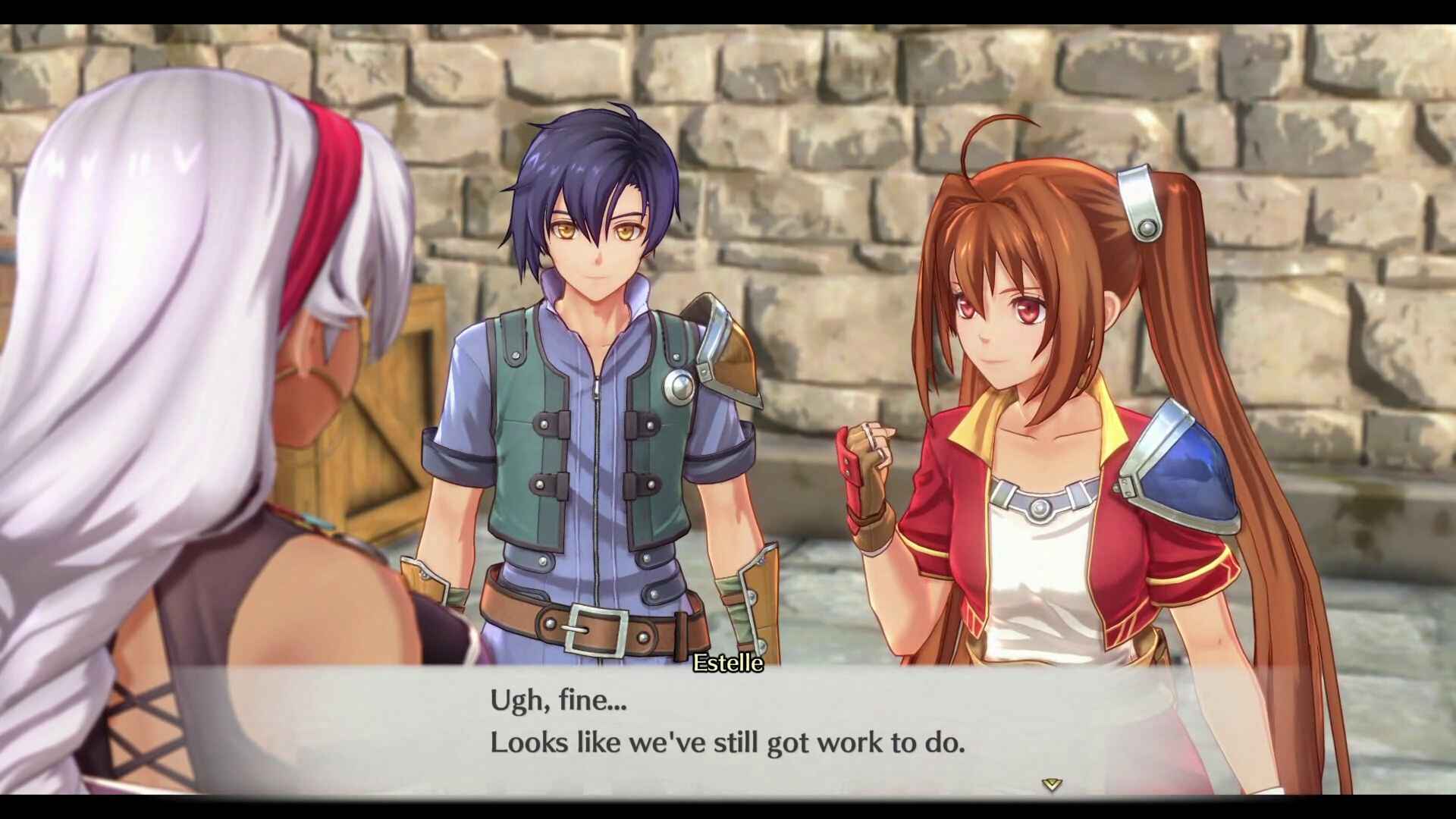
While I do find the game lacking in terms of the excitement and bombast that has become a staple in the later entries, I do think the structure works really well. Since both the protagonists are trying to become Bracers, a job that involves roaming the land to help people in need, you’ll show up in town and immediately head to the Bracer guild. Quests are posted here for you to take, while the guild leader for the town will point you in the direction of the main objective. You’ll likely spend a lot of time side questing, which will build your renown as a Bracer. Doing these nets you rewards, but also allows you to roleplay as these characters desperately try to make a name for themselves in this organization dedicated to keeping people happy and healthy. This also means your main quest objectives are quaint local mysteries or problems that pop up, which slowly expand in scope as the duo starts to uncover what happened to their dad.
I wish the side quest writing had been spruced up a bit though, as I feel like this is probably some of the weaker questing you’ll do in the series. The important aspect of this from a gameplay perspective is that it encourages you to get out into the world and explore, which is delightful, but I’d be hard-pressed to say many of the side quests really moved me. Punching them up to have more personality would have been nice, but just about none of the story was meaningfully expanded on or enhanced besides offering one new quest. Most of the changes are in the combat and presentation.
What made it over best in this remake of Liberl is just how open it feels. While blocked off to a specific zone per chapter, you’re always given free rein to explore every inch of it to your heart’s content. In the past few games of the Calvard arc, exploration has been limited and progression streamlined. You’re always in the main hub area, with excursions to other towns happening per chapter. I’ve never been able to feel like Calvard is a true, liveable world the way I feel Liberl is. This remake made me appreciate these idyllic countrysides, thanks to Falcom’s new engine.
And what a facelift that engine has gotten, too. This was released (worldwide, I might add) a year after the original Japanese release of Trails Beyond the Horizon. In such little time, they managed to completely overhaul their lighting engine, cleaning up the shading entirely. Faces look less angular, with all characters being rendered much closer to their character arc. This is the closest a Falcom game has gotten in their 3D era to looking like a true “Anime RPG”. It’s their best-looking game by far, and with even the upcoming Kyoto Xanadu you can tell they are interested in pushing the envelope stylistically. Being a bit more invested in the ongoing Calvard arc than this remake series, though, I can’t help but be excited for how the final game in that arc will look.

Running through the fields of sunny and beautiful Liberl was always my favorite part. As soon as I’d get to a new zone at the beginning of a chapter, I’d immediately just run out and map out every inch of it. Being able to climb up a large tower, look out, and see details from other parts of the country loaded in was incredibly impressive. The only loading screens to be found are when entering buildings. You can run out of town right into the field, fight monsters, and take on quests. This whimsy of exploration has never been handled like this in a Trails game, blowing even the original out of the water with how incredible Liberl was adapted into modern 3D.
On Nintendo Switch 2, you’ve got two visual modes to choose from: Quality and Performance. Quality aims to get the highest possible resolution at any moment, but with a completely uncapped framerate. Performance aims, and largely succeeds, to have a 60 frames per second target with lower visual fidelity. After many patches, this has been ironed out to make Performance mode an easy recommendation. It might not have the fancy dense foliage of the Steam or PlayStation 5 version, and the resolution isn’t as crisp as I’d like, but it’s a fantastic portable version of the game with very few cuts. There’s room for improvement, especially with NIS America’s fantastic Trails Beyond the Horizon Switch 2 port that offered up to 120 frames per second and DLSS, setting a high bar, but this Switch 2 version is still a good effort.
The combat is nothing like its original rendition. The original game had slower-paced turn-based battles on a strategy RPG-like grid. The general design philosophy of the combat persists, as it has in some fashion in all Trails games. The rigid turn-based battles of that original game have been replaced with the dual combat introduced in Trails Through Daybreak as a base. On the field, you have an Action Mode and a Tactics Mode. Action Mode involves you attacking and dodging enemies in real-time battles, with the goal of stunning one to switch over to the turn-based Tactics Mode with an advantage.
They seem to have wanted to step back from how action-focused the Daybreak games got. However, after getting a taste of Horizon, I’m sad to say this battle system felt to be too much of a step back mechanically. Action Mode feels fine, with dodging and crafts feeling responsive, but for too much of the runtime of 1st Chapter there’s just not enough new introduced to make up for how much they took away. In the second half of the game you’ll unlock Combo Attacks, which feed off a Brave Gauge meter to speed up battles in a flashy way. All this just means that the Action Mode gets the job done but not much else, and I found all of these encounters playing out the same way after a certain point. I think I just really wanted the mechanics of the system sprinkled out more regularly to keep the combat evolving from start to finish. 1st Chapter’s bones meant that they had to design around you only having Estelle and Joshua for most of the run, with only occasionally the third and/or fourth slot filled in by guests.
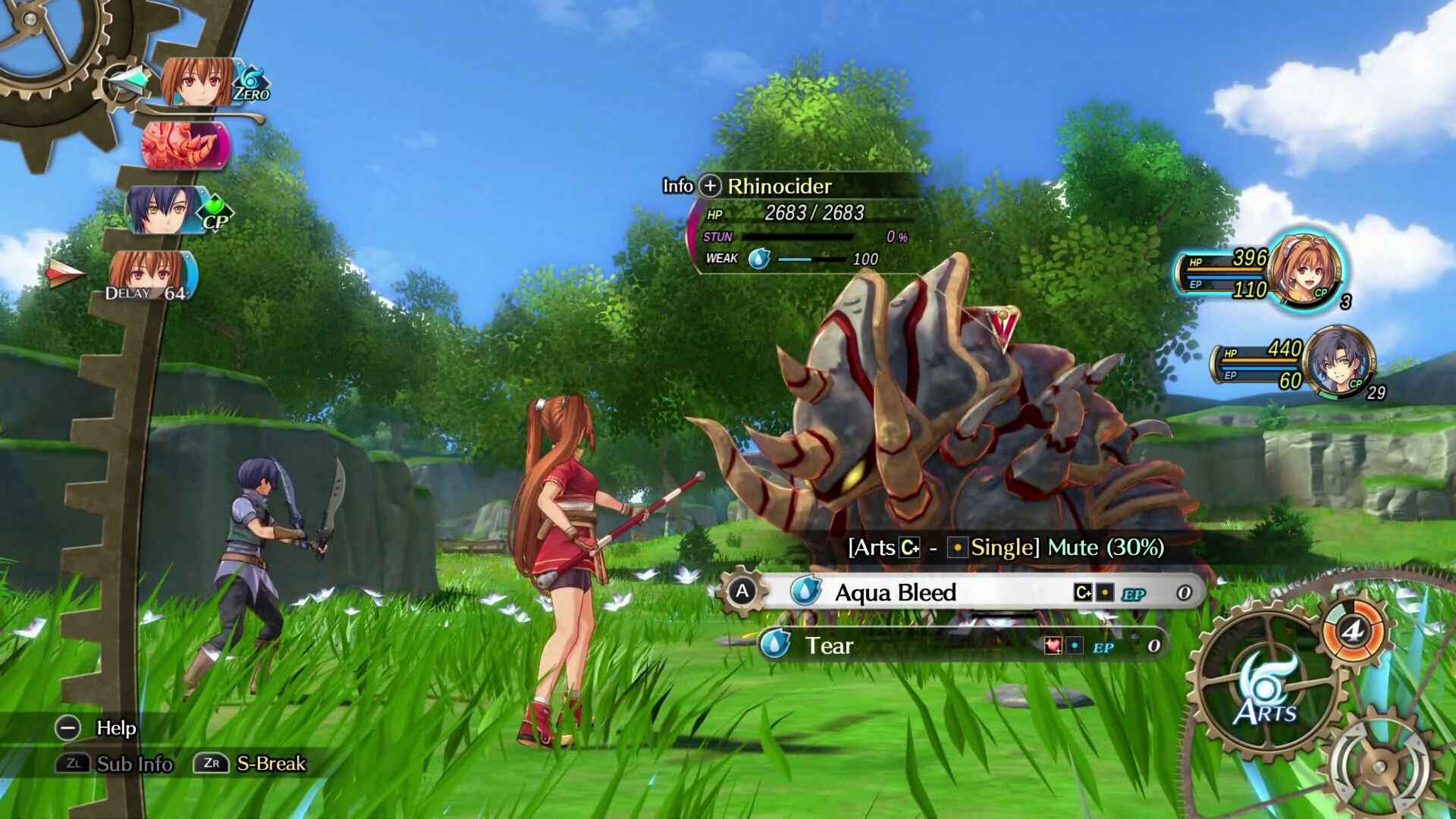
Besides that, the turn-based command battles feel just as tactical as I’d expect. The old Trails games had some bite to them if you weren’t playing optimally, and this game is no exception. Even with the ability now to pull off follow-up attacks, the game has clearly been rebalanced around all the extra power you have been given. It’s so often that remakes of classic RPGs feel the need to tone down the challenge for a modern audience, even on their higher difficulties, but I found Trails in the Sky 1st Chapter to be just as challenging as I remembered the original. I appreciate that Falcom still values the gameplay in their RPGs, even considering how cutscene-dense they can be.
Overall, the battle system might be a bit uneven but still is solid where it counts. I think stripping things back as far as they did was a mistake, even if it did make sense for things to stay down to earth this early on in the timeline. Robot Maids zipping around or cool Samurai doing Judgment Cuts would be out of place, but I think there should have been more of an effort to adapt the complexity of the Daybreak games with the smaller scope of Liberl. They at least took the amazing craft animations they’re now known for and have updated all the old battle animations to match the same bar from their latest games, so combat always looks great to play. I’m very interested to see if 2nd Chapter tries to fold in features from Horizon, or even tries to take it further.
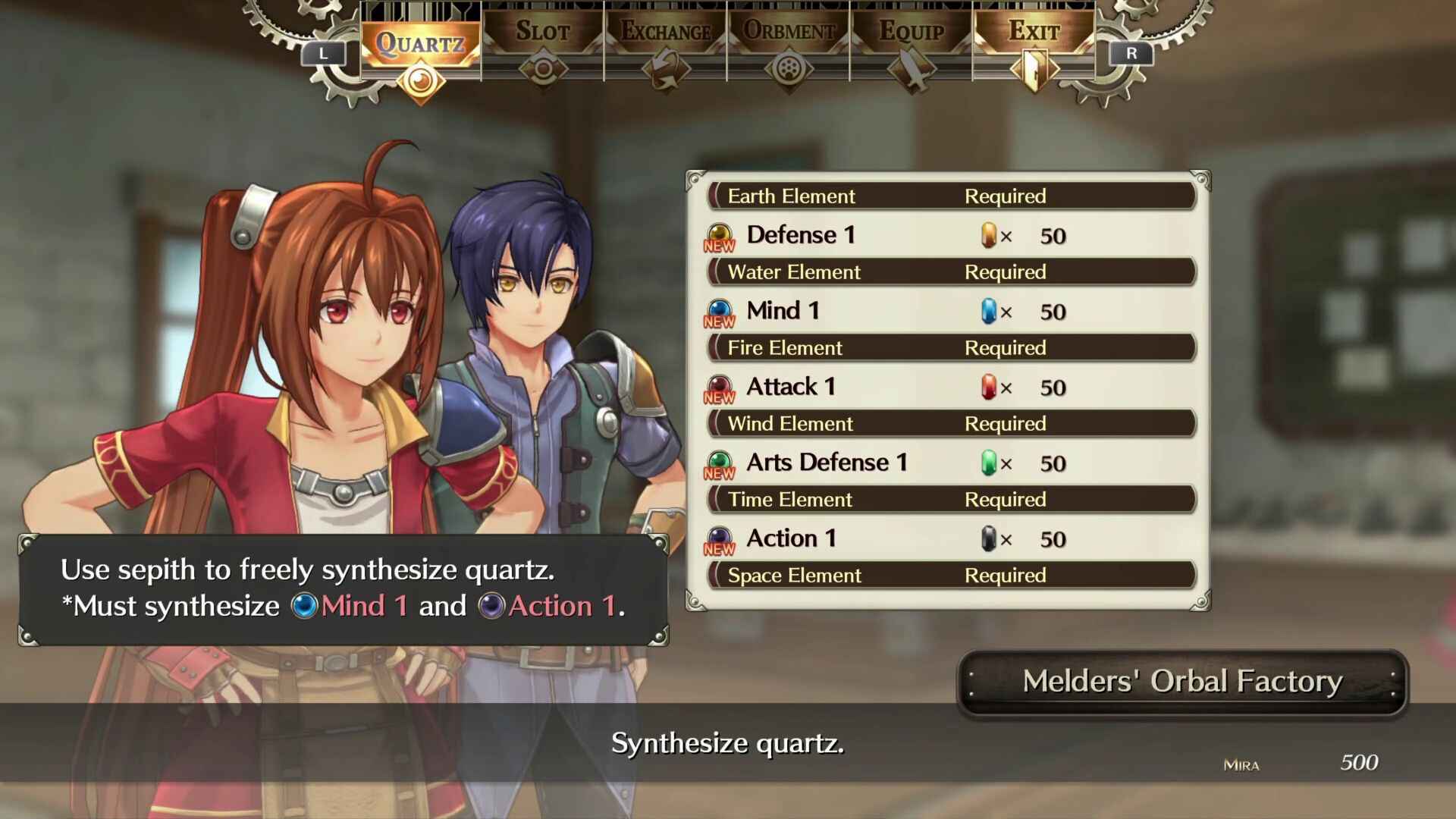
Orbments do return to how they were in the original, and that’s a carryover I actually really appreciate. I always was sad to see the series move away from how it was handled in the original few entries, even if it could get a bit confusing. The elemental total of quartz you set in your Orbment for a character will give them a variety of different Art, which are your magic attacks. They also give you a variety of different buffs, encouraging you to either play into their strengths or make up for their weaknesses.
Lastly, the story of Trails in the Sky 1st Chapter has received the biggest facelift of them all. Instead of using sprites and simple camera angles, every cutscene uses high-quality 3D models with dynamic camera angles. Dramatic story moments or fight scenes are better than ever before, thanks to fights not just being charming 2D sprites sliding around the field. Falcom’s current team of animators are some of the most underrated in the industry, and they’ve done a fantastic job bringing this game’s story to life. Also, for the first time ever in English, most of the cutscene dialogue is now voice-acted. Most of the original actors who did the battle grunts in the original PSP release were brought back, with the others being reprised by the actors who are now known for voicing these characters when they’ve shown up in later arcs.
These are all things you should have done when remaking a classic game today, and I think the voice acting is well done. With much more voice acting, focus on realistic character animations, and a cinematic presentation, 1st Chapter does feel slower than the original. It kind of exacerbated a problem I think 1st Chapter always had, though, with just being a bit too long-winded on a scene-by-scene basis. I’d be curious if Falcom found the original game’s script just a bit too sacred, since from my research it seems like almost nothing was cut or trimmed. I think reworking the scenes for brevity could have added a lot to the pacing. However, this means that newcomers aren’t really missing anything from the original experience. If anything, the improved presentation gives more weight to some of the best scenes in the game.
My issues with 1st Chapter’s story these days really just come from me having been playing these games for my entire adult life. I’ve seen how they can do better, with the first game of the next arc balancing odd job whimsy with high stakes and fantastic characters. A lot of this game’s plot is backloaded to the final chapters, with (very) small breadcrumbs spread throughout to try and keep you guessing. The political situation in Liberl is interesting for those who might not immediately get behind the character drama as well, but that too is mostly in the endgame. There’s a good story in here, the game just wants you to work for it.
When Trails in the Sky 1st Chapter wants to grab your attention, it does a fantastic job. I can’t truly dislike how slow this game sets up its story, because I already know it all pays off in the next game. If you’re fine with slow-paced stories, I think there’s a lot here. I might not like the budding romance between the two leads, but they’re undoubtedly wonderful characters and beloved for a reason. Estelle is one of the best protagonists we’ve gotten, and it’s a treat to see her grow throughout these games. The ending sequence is genuinely heart-breaking, and it’s where Falcom became known for their insane cliffhangers, which they’re still using to this very day. It’s great to see your patience rewarded, even if it does ask you to commit to 50 hours just to get to the really good stuff.
There was a draft of this review that bemoaned the quality of this game’s English localization. On launch, and for much of the first year this game was released, the quality of the game’s new English script was really lacking. This series has now firmly established itself in the west to have colorful localized scripts filled with personality, and that just wasn’t there in the script of 1st chapter. It was stiff, with characters speaking plainly and without flair. The terminology that had defined the series for over a decade was also inconsistently localized. I get that some people want overly faithful localized scripts, but I don’t even think the original script was that dry. The voice actors did an outstanding job delivering that, but you can tell they were held back by the material. They were even forced to read things just flat-out wrong, with every actor in the game saying “Liberl” as “Liberal”. It was really odd.
Just before this review, GungHo shadow-dropped a patch that seems to have given the game a fresh new editing pass. The terminology has now been completely reworked to be more in line with the other games, but more importantly, they got most of the voice actors back to redo old lines. Based on the recently released Trails in the Sky 2nd Chapter demo and this, GungHo has stepped up their game regarding localization. This bumps up the game a lot in my opinion, and I’m glad they took the time to listen to feedback from fans.
This is undoubtedly a great new entry point in the series, even with my qualms. If you’re a returning fan, you might have your misgivings about further extending a game that’s already just a bit too long in spots. But from all the new fans that have jumped in here, I absolutely see what this simple tale introducing them into the expansive world of Zemuria did for them. There’s a lot of promise here, and I’m beyond impressed with how thorough Falcom was in recreating that entire world in full 3D. It might be a bit too faithful to the outline of the original, but this is probably the safest option. If you love Trails in the Sky 1st Chapter, this is about as faithful to that original experience as you can get. This is still the original game at the end of the day, containing just about everything I loved or disliked about it, but that commitment to recreating that game just tells me that the sequel is in great hands. Trails in the Sky 2nd Chapter is one of my favorite games in the series, taking all of the lavish world-building in the original game and paying it all off in spades. I’m genuinely excited for new fans to see where this story goes next, and that’s the game that made me fall madly in love with these games.
Version Tested: Nintendo Switch 2
Review Copy Provided by GungHo Online Entertainment
You can read our full Review Policy and Ethics Statement here.


