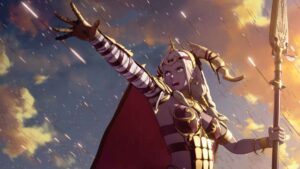

The year is 1454. The Dagdan Empire lies on the brink of death. Light fades, plants wilt, and the risen dead storm through the gates of hell. With each passing day, more people die, and more cities burn. The demon god Balor has been resurrected, and, with the hope of averting disaster, the progenitor goddess Sothis commands that you defeat him and drive his darkness from the land.
Recognising that you are faced with the impossible task of confronting Balor alone, Fortuna, the Goddess of Fate who is granted the power to glimpse into the future and travel through time, presents you with the rather welcome chance to tip the scales in your favour. You must journey into the past to help fallen heroes rewrite their destinies, and lead them into the final battle that will determine the future.
You play as Eshmel, the Herald of the Pale Raven, who awakens to be instantly told that they had died. With preparations made for their body to be reconstructed, it’s a bleak circumstance through which developer Intelligent Systems allows you to customise your character’s appearance. The options here aren’t as extensive as I would have liked, but I was happy enough with how my character looked. Fortuna will even ask how you feel about insects, which, while peculiarly random in the moment, relates to an Enemy Masking option that disguises giant cockroach-like Blight Louses as purple gas-like enemies if you have a particular phobia of them.
This Prologue is not only used to set up the game’s premise, but to familiarise newcomers and lapsed players alike with everything from movement and attacking to target lines and using terrain to your advantage. You’re also introduced to Combat Arts, which are attack techniques that grant special effects but reduce a weapon’s durability when used, and Blaze Arts, which sacrifice Health Points (HP) with each use but can be particularly devastating. When a Blaze Art is used, the unit’s Blaze Gauge increases, which you want to be half full. This is when the unit enters an Overblaze state, where its stats and Blaze Arts are strengthened. This won’t last forever, as when the Blaze Gauge is filled to capacity, the unit will Burst and the Overblaze state ends. These gameplay mechanics are layered in early, because they underpin everything that is to come.
Those who have been feverishly looking forward to Fire Emblem: Fortune’s Weave will have seen the Salamander weapons in the Nintendo Direct presentation, portable firearms that fire charged particle beams. Right from the opening Prologue, it’s immediately apparent how pervasively science fiction elements are interwoven with the series’ usual high fantasy setting. Having been on a relative media blackout until I came to play through the game to write this review, it wasn’t something that I had expected. I was fascinated to learn more, and that motivated me through the many hours I have sunk into the game so far. I’ll leave those momentous story beats for you to discover for yourselves.
I would say that Fire Emblem: Fortune’s Weave feels like a culmination of lessons that the developer has learned from the gameplay experiences it has produced over the last decade. Whether that be the three differing storylines to Fire Emblem: Fates (Birthright, Conquest and Revelation), the dungeons that were introduced in Fire Emblem: Shadows of Valentia, or the three-way branching path in Fire Emblem: Three Houses, those ideas are all present here but come together to result in a more cohesive whole, in that you can now experience everything within a single playthrough.
It is in its delivery and structure that Fire Emblem: Fortune’s Weave differentiates itself from what we have experienced before. After the Prologue, you will find yourself in the Obelisk Chamber, where you learn that the game is split into three Parts. To briefly explain how these work, Part I introduces your chosen hero as they enter the Heroic Games, letting you learn more about their backstory and the circumstances that lead them to participate. In Part II, the story progresses to the point where you rewrite their causality so they can join your stand against Balor. Part III is the final push, where the assembled Flame Lords of Dagda and their companions set out to confront and defeat the demon god’s armies.
It will be a widespread comparison point, but similar to The Legend of Zelda: Breath of the Wild, you can choose to do as much or as little as you wish before facing Balor. You can even skip straight ahead to Part III. That said, Fortuna will be exasperated at the idea, begging you to reconsider until you recruit the four Flame Lords, as proceeding without them and with such paltry forces at your side is to choose death, but it’s possible. To progress through Part III without them is impossible. I know, because I was foolish enough to try and miserably failed.
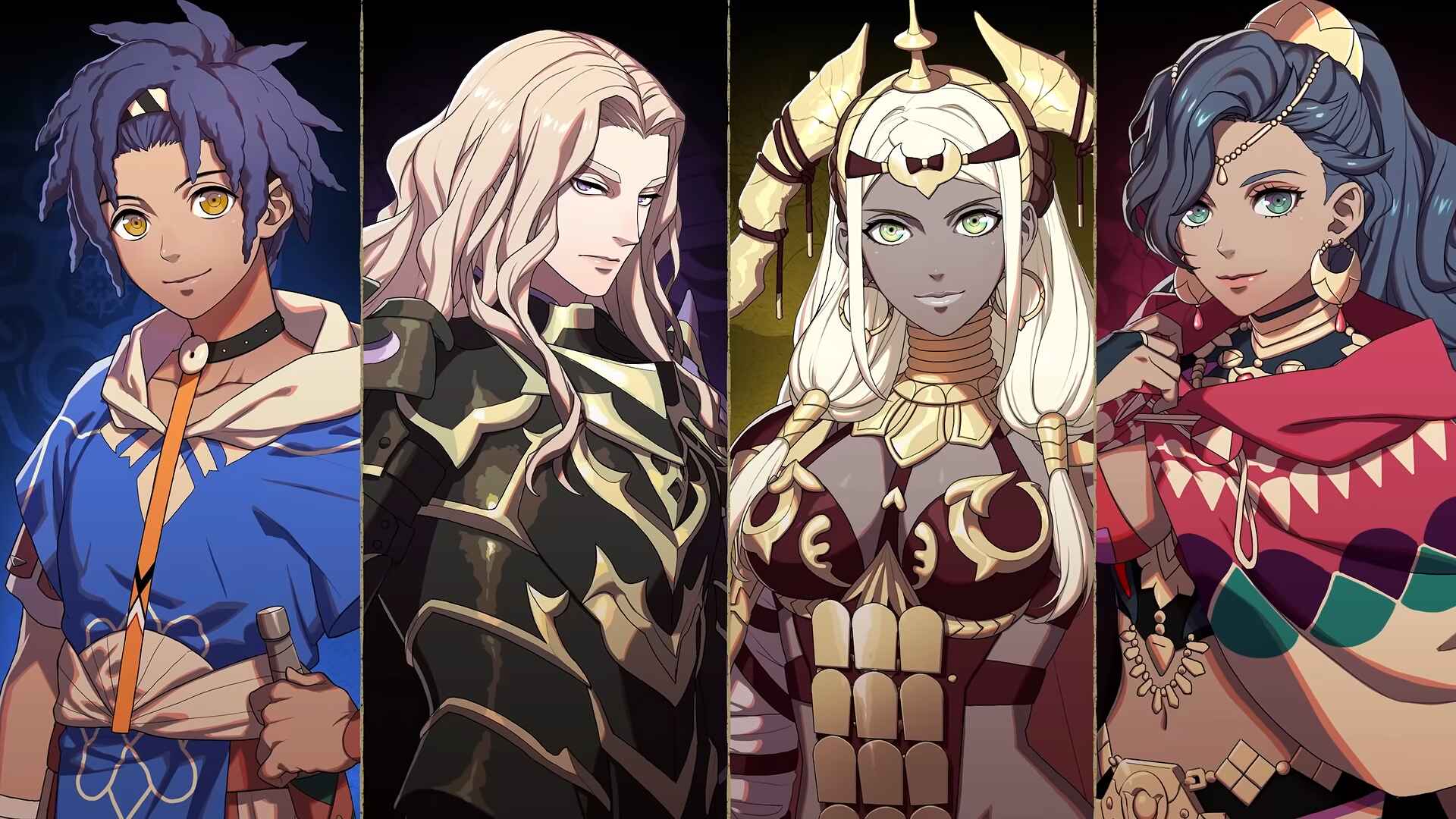
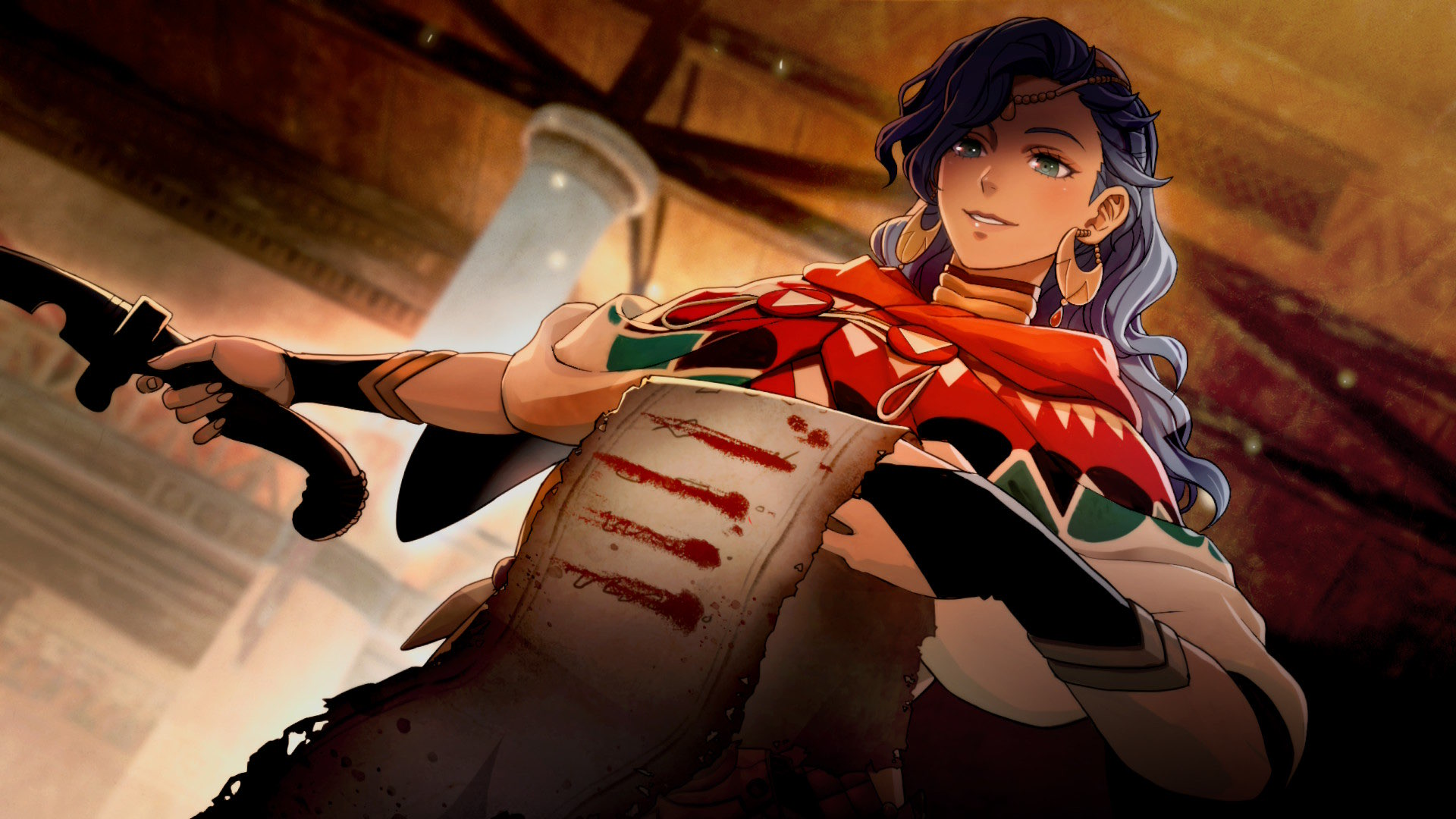
It’s important, then, to intervene in each warrior’s past, bending the laws of causality to guide the Flame Lords to safety in the present. You can interact with four obelisks to begin their paths: Cai Castor (Fox Obelisk). Dietrich Gregor Lamine (Lion Obelisk). Theodora Segio Savangren (Wolf Obelisk), and Leda (Eagle Obelisk). These can be completed in any order, and you can even swap partway through a storyline to another if you’d like.
You will learn through their storylines that these characters mysteriously come to possess Drake’s treasures, a legendary Pirate King who is known to have looted them from somewhere before using them to rule the Danaan Sea. After his death, the treasure was scattered throughout Dagda. There’s something far more sinister to this that I will leave you to discover for yourselves, but the treasures attract one another, which, unbeknownst to them, is why certain warriors have been drawn to compete at the Heroic Games in the imperial capital city, Dagsion.
The Flame Lords have their own motivations for participating, too. Whoever wins the Heroic Games will be granted one wish from the Divine Sovereign, Solel: Cai seeks to have his father pardoned for crimes that have seen him imprisoned; Dietrich simply relishes the chance to satiate his unquenchable thirst for battle against the strongest enemies; Theodora fights to fulfil her people’s long-held dream; and Leda is on a quest for revenge, seeking to kill all those responsible for her father’s murder.
Purposefully, each character, their companions, and the paths that they tread are tonally different from one another. They have unique Blaze Arts to use in battle, too: Cai can unleash widespread flames from the palm of his hand to damage multiple enemies at once; Dietrich wears Ink-Black Wen, a cloak that allows him to teleport across the battlefield; Theodora’s right arm is powerful enough to tear up chunks of earth and hurl them at her enemies; and Leda wields a legendary vihuela called Obsidian that she can strum to perform Spellsongs that buff up her allies.
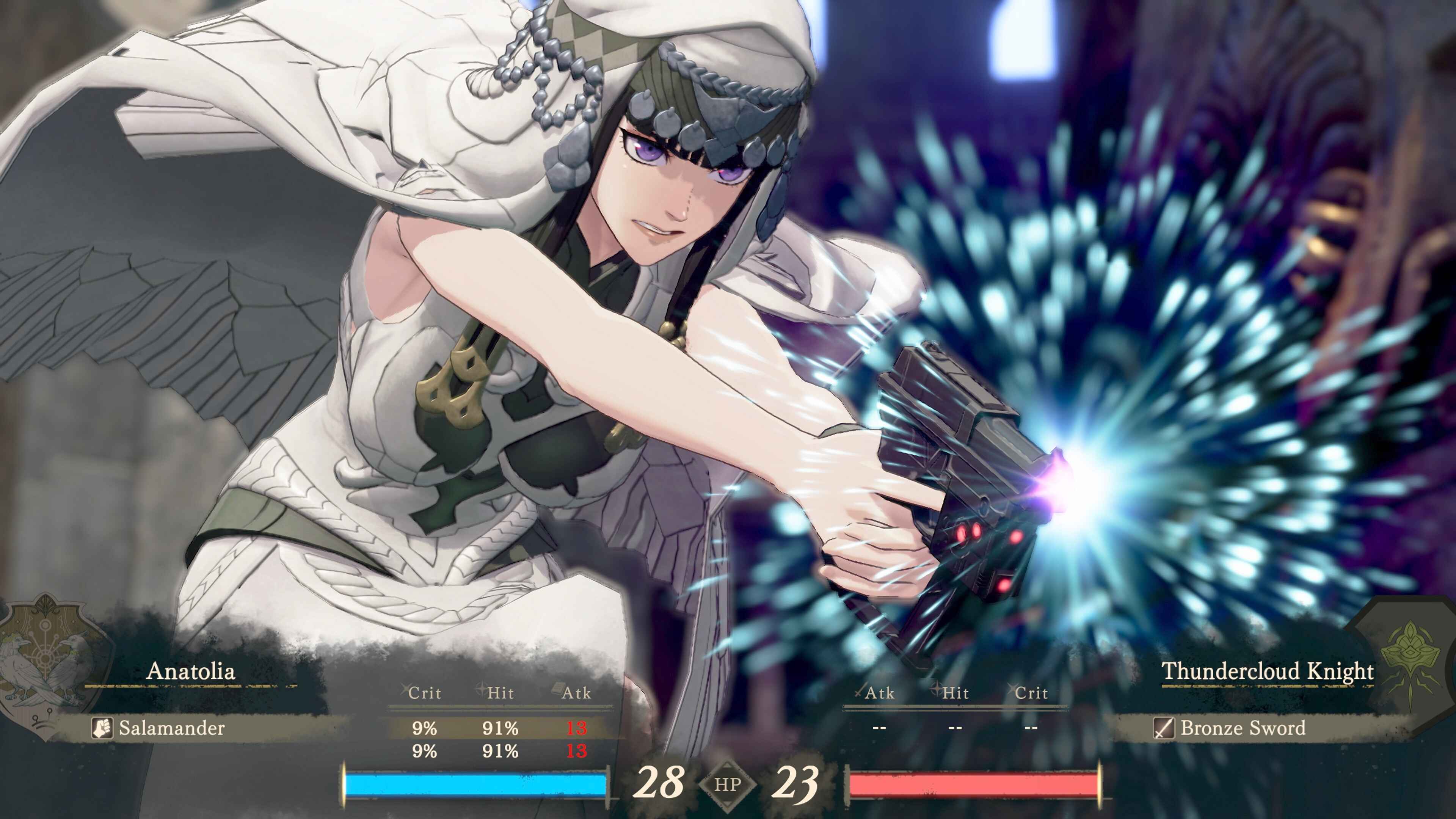
There’s much to Fire Emblem: Fortune’s Weave that will be familiar. The strategic, turn-based battles that play out across grid-based terrain. The constantly stress-inducing experience if you opt for Classic mode, where every decision counts, as units who fall in battle are lost forever (although you can use Fortuna’s potent Divine Sand to rewind time if you make a fatal mistake). It remains important to level up your units to pass Certification Exams and unlock new Classes (which are in Beginner, Specialty, Advanced and Master tiers), as these will dramatically improve their abilities and the weapons they can wield. You will also need to share Gifts and invite characters to Meals to increase their Support Level, seeking to meet their necessary recruitment requirements to convince them to join your forces.
There’s much that is new, too. Structurally, each Flame Lord has their own scheduled matches in the Heroic Games and other pivotal story beats that are signposted as Main Quests, and how you spend your time leading up to these is left entirely up to you. You could head to the Shopping Arcade to buy stronger weapons from an Armorer, have a Blacksmith refine those you own to strengthen them, or help out in Temple Row to unlock and then level up a God’s Blessing that can be used to sway trickier battles in your favour. There’s also the chance for allies to train together to gain skill experience, to bathe together in the Thermae for temporary buffs, or to even have them perform in a play. If you’re unsure what to do to pass the time, there is a handy Adventure Journal that can recommend something to focus on.
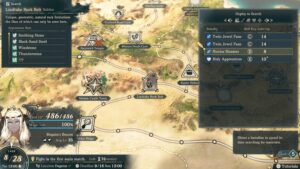
Beyond Dagsion’s walls, your main distraction will inevitably be the World Map. Whether it be quests, Paralogues, venturing into dungeons or gathering materials, this is where most of that is achieved. With a number of “turns” until your next Main Quest occurs, each action you take on the World Map, such as moving, entering a skirmish or mining for gemstones, will deplete one turn. Your continued exploration will unearth new locations for you to explore, with Carriages helping you to move around the World Map much more quickly, settlements presenting a chance to recover your health and browse their shops, and merchants can appear with rarer wares for sale.
Dungeons are explored from a third-person perspective and are a worthwhile diversion for the items and materials you are rewarded with from breakable crates, ore deposits and treasure chests. Enemies roam inside these locations, and when you make contact with them, a Clash will start. These are fast-paced, turn-based encounters where your units and the enemy attack each round, looking to wipe each other’s HP to zero. Your units can team up to perform Link moves, whether the result is to deal greater damage or help your allies recover their health. This requires Link Points (LP), which are easily replenished, and is another way in which you can build the Support Level between characters.

The Flame Lords have their own unique content, too. Cai has Kindness quests, increasing renown and earning rewards through offering help to those in need. He can also receive mentoring from other characters to learn new Combat Arts or receive items, cultivate plants on farmland, and lure wild mounts to tend to at the stables. Dietrich can use the fell blade Answerer, a Hero’s Relic from Fódlan, to encounter more enemies on the World Map to battle in Skirmishes, headhunt Dread Warriors to learn secret Combat Arts, and boost those he has learned in Smyrnos’s temple. Meanwhile, Theodora can assign Battalions to her units to increase their stats and send supplies back to Saramis. Whereas Leda can journey across the World Map to dance in taverns, her spectacular performances earning her renown and the chance to learn new Spellsongs.
It took me more than 100 hours alone to complete all four paths in Part I, which is a significant portion of the game. Intelligent Systems respects your time, though. If you simply want to skip ahead to your next Main Quest, you can have your units perform Auto-Activities. Your options here are Search, Combat and Training, which can be selected per unit. Depending on which you choose, each unit will gain Experience, Class Experience or Skill Experience, earn Gold or gather Materials. After completing one Flame Lord’s path, repeated side quests for the next Flame Lord auto-complete to save you time. There is also an achievement-like system called Notable Deeds as well, many of which you will complete by simply playing through the game normally. These reward you with Karma Shards that can be used to unlock Boons of Salvation, optional boosts that you can toggle on to increase the experience earned in battle, lower prices, increase material drop rates, or reduce how much Divine Sand a Blessing costs, for example, which expedited each successive Flame Lord path that I completed.
It is the battle maps that the series is known for, and Fire Emblem: Fortune’s Weave does not disappoint. There’s spectacle, too. For the gladiatorial-inspired Heroic Games, the appearance of the colosseum is changed to recreate the look of a historical battle. There is some minor repetition from when the Flame Lords’ paths cross while participating in the Heroic Games, but I was impressed with the variety that Intelligent Systems has spread across the game’s entirety.
While the victory conditions rarely change from defeating a leader, eliminating all enemies or escorting a character to an escape point on the map, the challenges that you have to overcome were what maintained my interest. Shattering barriers to topple large beasts, dealing with low visibility in sandstorms, dodging rapidly spreading flames, calming panicked characters, or neutralising ballistae and onagers, there are even more lighthearted matches where you compete against your opponent to light the most torches or wipe out more giants than them. As you progress from Part I through to Part III, the scale and scope become increasingly complex. There are more units placed at your command per battle, but you are confronted with even more enemies to have to fret about. The difficulty curve never felt insurmountable, but I certainly came to rely on Fortuna to rewind time after one or two of my misplaced units were swarmed.
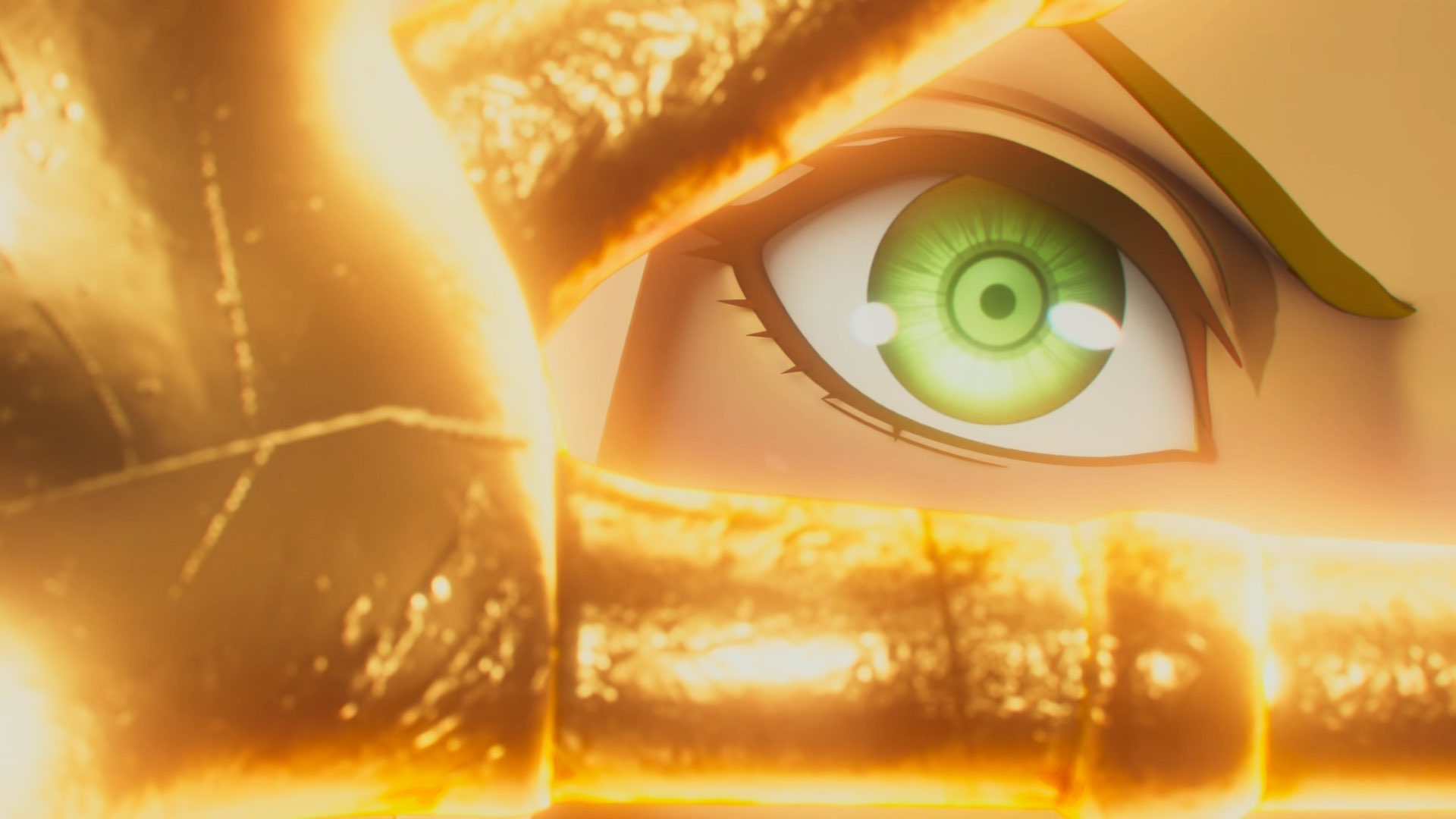
There is an Auto-Battle option that you can use each turn to have your allies act automatically. Your options here are to command them to Advance, Charge, Defend or Fall Back, which, particularly in larger-scale battles, I often used to save me having to move every unit individually. It has some caveats, though, in that it never seemed to take advantageous or hazardous terrain into consideration, and would often overstretch units so that they were far from the support of their allies. It baffled me at times to the point I became reluctant to use it. You can always rewind time, I guess, but it could always perfectly line up Benditz to unleash a Heavy Charge on his seemingly impenetrable War Elephant to crush rows of enemies. You will never get bored of the War Elephants, I promise you.
You will already know that Fire Emblem: Fortune’s Weave looks incredible. This is such an impressive start for the series on Nintendo Switch 2. The game’s vibrant art direction, matched with likeable, personality-packed characters, breathes life into the world Intelligent Systems has created. The voice actors excel with their performances, the Support Conversations are at their best when they are humorous, and I was never short on choices for which allies I wanted to keep at my side. I found it hard to pick my outright favourites, for once. I wish Eshmel spoke, though.
I also want to mention that I found the support for mouse controls with the Joy-Con 2 controllers was a welcome option, and once I’d bumped up the cursor speed, I enjoyed experimenting with using them as a different input method to conquer the battlefield with my units. I have loved Nintendo Switch 2 opening the door to mouse controls, but my unwavering issue is comfort over longer play sessions. I really hope Nintendo (or a third-party peripheral manufacturer like HORI) would produce a mouse-like holder for the Joy-Con 2, especially if they want this to be a consideration for more people to check out.
With Fire Emblem: Fortune’s Weave, Intelligent Systems masterfully deliver strategic perfection. What early on felt intimidating in scale went on to become breathtaking in its ambition, science fiction and high fantasy colliding throughout to result in an experience that easily ranks as my favourite Fire Emblem game to date. From its tactical brilliance on the battlefield to its meaningful character development, it’s another Nintendo Switch 2 exclusive that proves itself to be yet another simply unmissable masterpiece.
Version Tested: Nintendo Switch 2
Review Copy Provided by Nintendo
You can read our full Review Policy and Ethics Statement here.