

I did not realise just how much I had missed this. From storming La Pointe du Hoc on D-Day in Call of Duty 2 and the unforgettable twist in Call of Duty: Black Ops to calling in chaotic killstreaks for the first time in Call of Duty 4: Modern Warfare, the series has near enough been a constant thread throughout my gaming journey. That said, Call of Duty: Ghosts on Wii U was the last game I reviewed, making writing about the series’ return on Nintendo Switch 2 feel all the more meaningful.
When Microsoft announced that it had “entered into a 10-year commitment to bring Call of Duty to Nintendo,” we weren’t sure what that would exactly mean. With neither Nintendo Switch 2 (or Nintendo Switch, for that matter) on equal footing with Xbox Series X|S and PlayStation 5, did it mean that only past games would be ported? Would they be campaign-only? Well, it turns out we only went and got the whole shebang.
It’s somewhat fitting that it is series creator Infinity Ward whose vision we get to experience first. Although somewhat awkwardly, we get Call of Duty: Modern Warfare 4, the finale to the four-part Modern Warfare reboot. With Digital Legends Entertainment tapped in to lend its expertise in porting the game to Nintendo Switch 2, the 13-year wait for the series to be back on our radar is over.
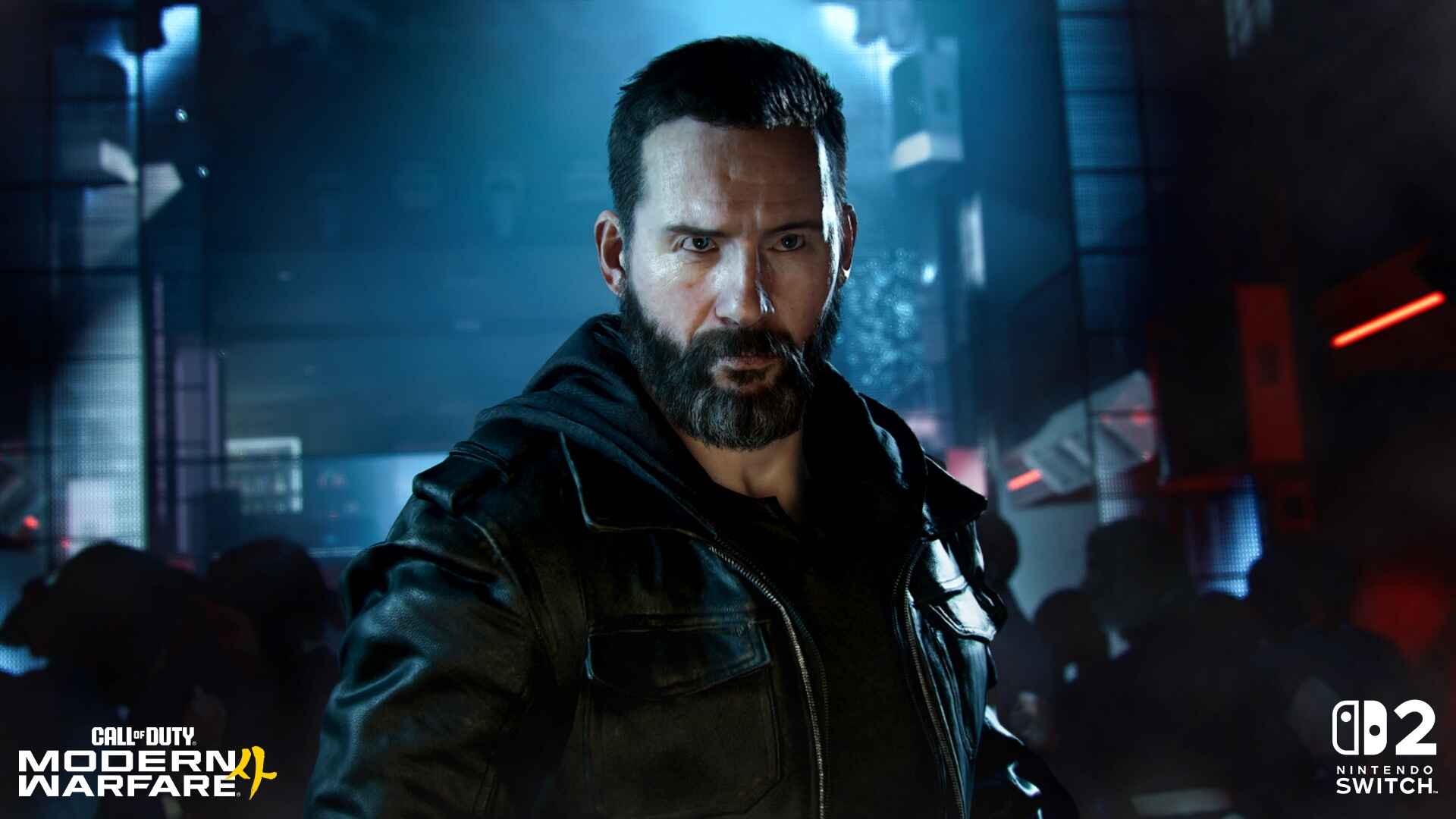
“We Get Dirty, And The World Stays Clean. That’s The Mission.”
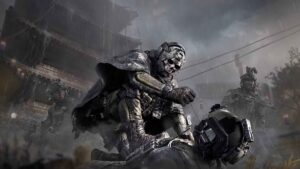
For a series that has spent more than two decades trying to outdo its own blockbuster excesses, Call of Duty: Modern Warfare 4 somehow still finds ways to surprise. Its opening hours are among the most intense Infinity Ward has ever produced, throwing players into a rapidly escalating international crisis that transforms city streets into battlefields and turns ordinary civilians into casualties overnight. Yet beneath the pounding artillery strikes, rooftop parkour chases and globe-spanning military operations lies a story with a more personal focus than you might expect. Modern Warfare 4 is ultimately less interested in the politics that start wars and more about the people forced to endure them.
That doesn’t mean it’s short on spectacle. Far from it. The campaign is packed with the sort of heart-pounding set pieces the series practically invented, ranging from close-quarters urban combat and stealth infiltrations to poignant confrontations between its lead characters. What’s impressive is how frequently Infinity Ward changes the rhythm. One mission might have you scavenging for resources to survive behind enemy lines, while another sees you fiercely battling from trench-to-trench in a desperate effort to reclaim a nuclear power plant. Even after years of increasingly extravagant Call of Duty campaigns, Modern Warfare 4 rarely feels predictable. Whenever it appears to be settling into familiar territory, it introduces a new location or unexpected narrative twist to keep things moving.
The strongest missions aren’t necessarily the loudest ones, though. Several of the campaign’s highlights succeed because they slow everything down, allowing tension to build naturally before throwing you back into the chaos. Following Orders is a great example, where North Korean Special Forces must hunt a defector before he can cross the border. The result is a campaign that understands pacing far better than many of its contemporaries. Rather than exhausting players with nonstop explosions and gunfire, it carefully alternates between quiet dread, tactical combat, and all-out warfare.
Those quieter moments also allow the cast to shine. Returning favourites like Captain John Price (Barry Sloane), Simon “Ghost” Riley (Samuel Roukin) and Valeria Garza (Maria Elisa Camargo) are given meaningful development, while several newcomers such as Park Hyun-Jun (Young Mazino), Ri Seung-Ho (Jeongmin Cho), Ri Ju-Young (Prisca Kim), Ko Jin-Hyuk (Lanny Joon) and The Archer (Mads Mikkelsen) avoid becoming instantly forgettable characters thanks to strong performances and surprisingly effective writing.
What impressed me most is how willing Modern Warfare 4 is to challenge the clear-cut morality that military shooters often rely on. There are heroes and villains here, certainly, but many of the campaign’s most memorable moments exist in morally grey territory. Characters second-guess orders, alliances become increasingly fragile, and victories often come at an uncomfortable cost. Infinity Ward never pretends to offer easy answers, and that ambiguity gives the narrative more weight than a straightforward good-versus-evil conflict would have managed.
Not every aspect lands perfectly. The story occasionally becomes tangled in its own legacy, particularly when revisiting plot threads established across previous entries. Those who haven’t kept up with the past three games may find themselves struggling to remember the significance of certain characters or not feeling the impact from revelations that are made. Even so, these issues rarely undermine the campaign’s momentum for long.
You can read more about my thoughts in my earlier Campaign Impressions article.
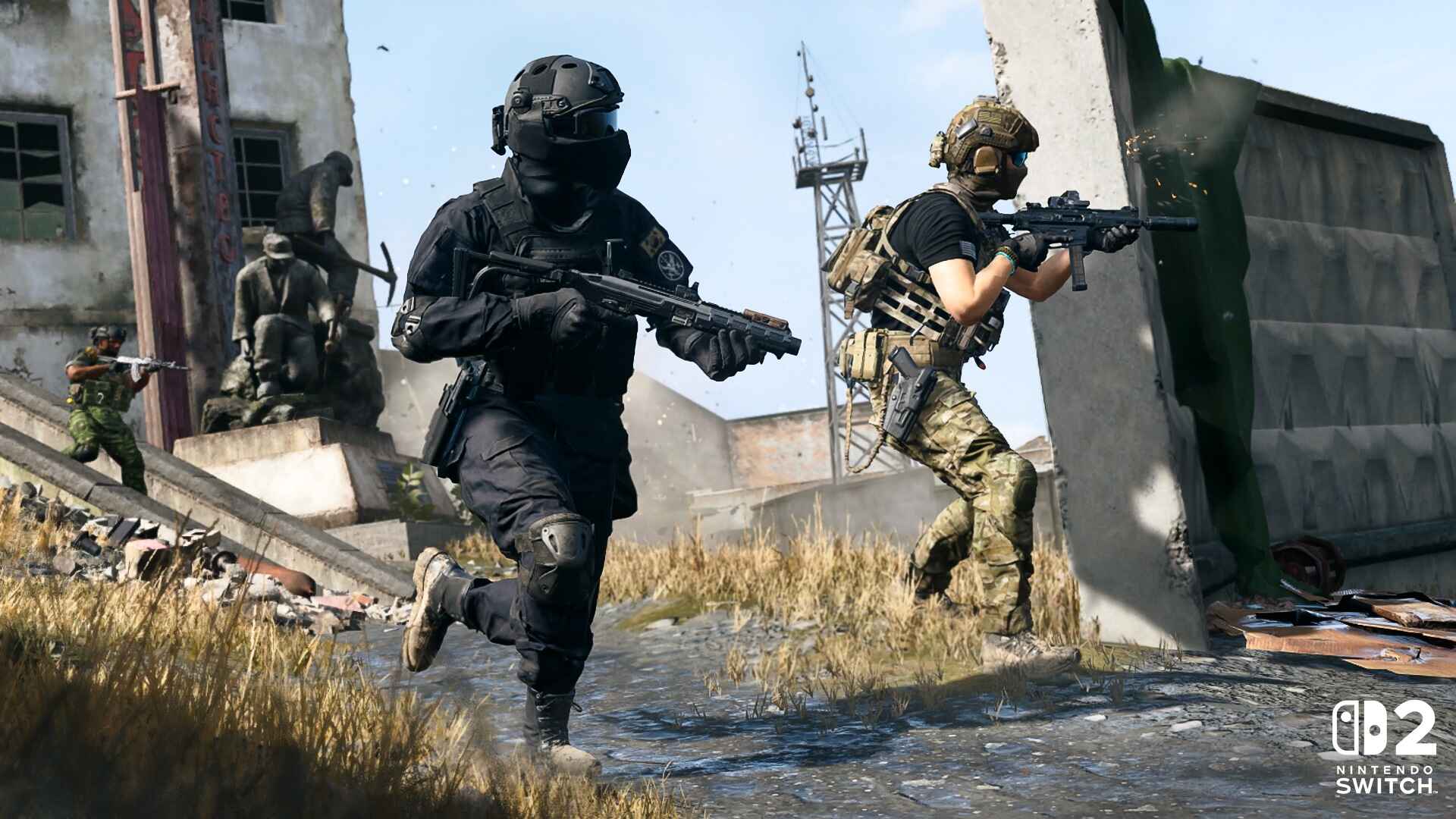
Multiplayer Is Fast, Addictive And Hard To Put Down
If the campaign provides the cinematic blockbuster thrills, the Multiplayer mode unsurprisingly remains the beating heart of Modern Warfare 4. Infinity Ward hasn’t reinvented Call of Duty’s competitive formula, but it has refined it to an impressive degree. Gunfights are fast, lethal, and immensely satisfying, with weapons delivering the sort of punchy feedback that makes eliminating any player at the receiving end of them feel rewarding. You can continue to tinker with your favourite weapons in Gunsmith, customising anything from their muzzle, barrel and optic to their magazine, ammunition and rear grip, with such tweaks helping you to be more effective at taking out your competition. Movement strikes a comfortable balance between the grounded approach of recent Modern Warfare entries and the fluidity expected from modern shooters, resulting in matches that feel both tactical and exhilaratingly unpredictable. I still find everyone sliding around on the floor everywhere irritating, though.
The map and mode selection deserves particular praise. Whether you’re flanking the rival team through narrow alleyways in Team Deathmatch, fervently defending objectives to earn points in Domination, or attacking bomb sites in Collateral, the series remains largely unrivalled when reaching the height of its competitive thrills. Importantly, the maps feel designed to facilitate action rather than slow it down, ensuring downtime between engagements is kept to a minimum. I even find it hard to pick a favourite. Coal, Mumbai, Nautical, Reactor U92, Silkworm, Munition, Sentry… they’re all brilliantly designed, and I don’t think there were any that I particularly grumbled about when they came up on the rotation. Oh, wait. Cachette. I can’t get my head around that one.
I really enjoyed the new Kill Block mode, where the three-part battleground is constantly reconfigured between each match from modular Slabs. Ground War: Combat Outpost wasn’t for me, though. I found this 64-player mode chaotic, frustrating and overwhelming. It made me put down my Nintendo Switch 2 Pro Controller at one point. With the high player count, I died too often and sometimes seconds after respawning. I’m sure it will have its fans, and I will still have a dabble with it every now and then, but, for me at least, it’s not the multiplayer experience that I come to Call of Duty for.
What does continue to elevate Multiplayer is the quality of its progression systems. There’s a constant stream of unlocks, weapon customisation options, and challenges to complete that help make leaping into every match feel worthwhile, even when your impact on the scoreboard isn’t always particularly flattering.
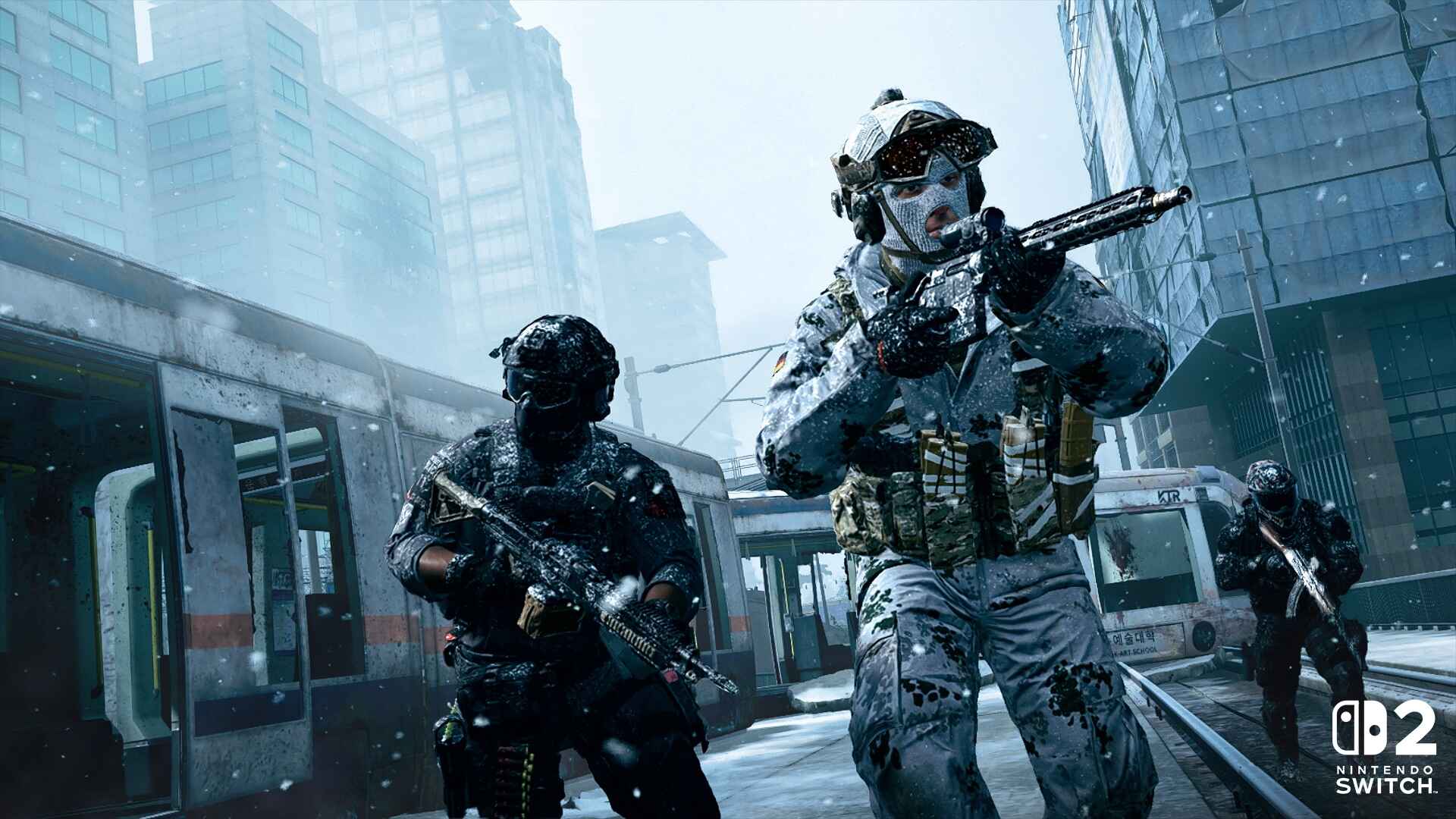
Making Memories In DMZ
For all of Call of Duty’s success over the years, few modes have captured the unpredictable chaos of multiplayer quite like DMZ. After first appearing in Warzone 2.0, the extraction-based experience returns in Modern Warfare 4 with renewed confidence, transforming what was once an intriguing experiment into a fully realised pillar of the package. Set within the irradiated remains of Hajin City after the campaign’s devastating events, DMZ drops you into a hostile Exclusion Zone where every decision carries risk. Do you push deeper into enemy territory in search of better rewards, or play it safe and head for extraction? The answer changes from one deployment to the next, and that’s precisely why I found DMZ so compelling.
What immediately stands out is how effectively it creates player-driven stories. Objectives, contracts, and progression systems provide structure, but the real magic happens when carefully laid plans inevitably collapse. One moment you’re methodically scavenging resources and clearing hostile compounds, and the next you’re desperately sprinting for an extraction helicopter while rival squads close in from every direction. The tension is constant because nothing is guaranteed. Success brings valuable rewards and meaningful progression, while failure can result in the loss of Operators you’ve spent hours investing in. Every deployment feels consequential, making even small victories exhilarating. Whether battling AI-controlled enemies, raiding high-risk locations for rare loot, or engaging in sudden firefights against other players who are chasing the bounty on your head, DMZ consistently generates the sort of memorable moments that scripted multiplayer modes simply can’t replicate.
Modern Warfare 4’s revamped progression systems only deepen that investment. Operators can be shaped through specialised skill trees, loadouts can be customised to suit different playstyles, and your Forward Operating Base provides a satisfying sense of long-term progression between deployments. Better still, none of it overshadows the mode’s greatest strength, which is the freedom to approach each run however you choose. You can focus on completing missions, hunting valuable resources, avoiding conflict entirely, or actively seeking out rival players. Combined with surprisingly strong performance on Nintendo Switch 2, DMZ becomes an experience that is difficult to put down and even harder to stop thinking about afterwards. It succeeds because it understands what makes extraction shooters special. That comes from the unlikely and unforgettable stories that emerge from diving into it.
You can read more about my experiences in my earlier DMZ Impressions article.

In Digital Legends Entertainment We Trust
Bringing a game as ambitious as Modern Warfare 4 to Nintendo Switch 2 was always going to require compromises, but what’s most impressive is how rarely those compromises feel intrusive. Digital Legends Entertainment has clearly prioritised preserving the experience itself rather than chasing visual parity with more powerful platforms. The result is a version that may lack the graphical flourishes seen on pricier hardware, but still succeeds where it matters most: maintaining the scale, intensity, and cinematic spectacle that define Infinity Ward’s latest military blockbuster.
From chaotic firefights in crowded urban environments to the sprawling battlefields of DMZ’s radioactive Exclusion Zone, I never felt as though I was playing a watered-down interpretation of the game. Gunplay remains responsive, movement retains the fluidity expected from a modern Call of Duty, and firefights feel every bit as tense and satisfying as they should. That’s particularly important in DMZ, where a split-second decision can mean the difference between a successful extraction and losing an Operator you’ve spent hours with, as much as it does in Multiplayer, where a lower or inconsistent framerate would place you at an insurmountable disadvantage.
The Nintendo Switch 2 port will have its detractors, but what ultimately sets it apart is the flexibility it offers. Having the chance to complete a campaign mission from pretty much anywhere gives it an entirely different appeal. The inclusion of gyro aiming and surprisingly adept Joy-Con 2 mouse controls only reinforces that versatility, offering multiple ways to play depending on your preference. While it won’t convince graphics enthusiasts to abandon their high-end hardware, this port achieves something arguably more impressive in delivering a genuinely authentic Call of Duty experience in a portable format without sacrificing the core qualities that make the series so compelling.
Call of Duty: Modern Warfare 4 may close the chapter on Task Force 141, but opens a door to the series’ future with DMZ and a whole new audience on Nintendo Switch 2. It arrives uncontested on the portable home console, with Infinity Ward delivering a superb package that pairs an ambitious and emotionally resonant campaign with its relentlessly-paced signature multiplayer that remains as addictive as ever, while DMZ stands out as one of the most compelling experiences the franchise has produced in years.
Just as importantly, Digital Legends Entertainment has achieved the seemingly impossible, bringing an authentic Call of Duty experience to Nintendo Switch 2 without compromising what makes the series special. As someone whose gaming journey has long been intertwined with Call of Duty, reviewing its long-awaited Nintendo homecoming has been both nostalgic and rewarding. Better still, this isn’t simply Call of Duty’s return to Nintendo. It’s a punchy and confident reminder of why the series became a phenomenon in the first place.
Version Tested: Nintendo Switch 2
Review Copy Provided by Activision
You can read our full Review Policy and Ethics Statement here.



The fact that a full Call of Duty release runs this well on a Nintendo handheld still feels strange in a good way. Performance mode holding up in multiplayer is the part that matters most — if the frame rate dipped there, nobody would stick with it. Good detailed review.